← Back to programme · (01 / 04)

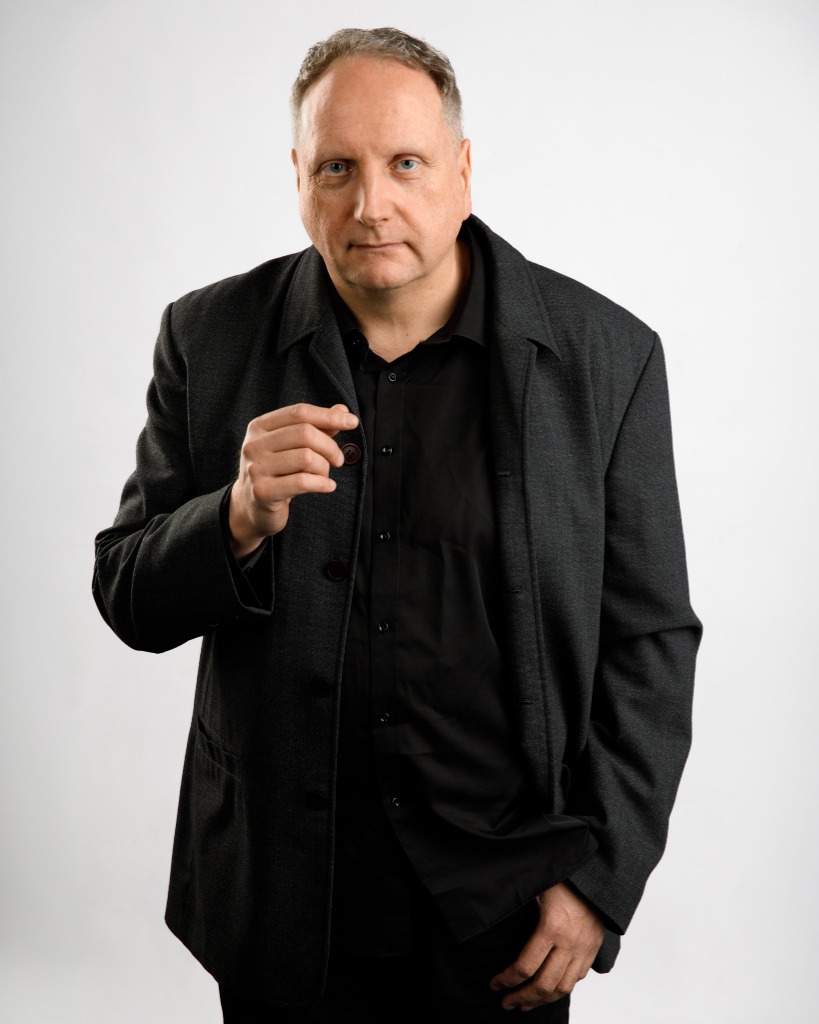
Prof. Dr Rimantas Plungė

(Encounter Date) 15 November 2026 · 12:00
(Session Focus) Interdisciplinary Art
(Media) Painting · Photography · Video Art
(Venue) J. Monkutė-Marks Museum-Gallery, Kėdainiai
(01 · Media Artist)

Prof. Dr Rimantas Plungė

Prof. Dr Rimantas Plungė
(Session Focus)

15 Nov 2026 conversation on creative process across painting gesture, photography and moving image.

(01 / 07)

Biography and Academic Career

Born in Šiauliai in 1971, the artist earned his Master of Fine Arts degree in 1996 and defended his doctoral dissertation in educology in 2010. He has pursued academic teaching and research since 1996. Since 2010, he has worked at Vytautas Magnus University, where he served as Head of the Department of Contemporary Arts from 2010 to 2017. His professional leadership significantly fostered the development of contemporary media art studies, the creation of new degree programmes, international academic partnerships, and the dissemination of artistic research.

A member of the Lithuanian Artists’ Association since 1999, he has headed the Šiauliai Artists' Branch, organized and curated national and international exhibitions, art festivals, and interdisciplinary initiatives. His academic and artistic practice has been presented across Lithuanian and international institutions, and his works are held in museums, galleries, and private collections across Europe, the United States, and Asia.

The artist's practice encompasses painting, collage, experimental photography, video art, and digital media. He perceives these fields not as separate, isolated practices, but as interrelated modes of inquiry and personal experiential interpretation.
(02 / 07)

Creativity as World Knowledge and Personal Mythology

The cornerstone of Rimantas Plungė's artistic practice is a continuous inquiry into the relationship between human existence, cultural memory, and individual experience. For the artist, creation is not merely the construction of aesthetic form; it is a means of understanding the world, contemplating one’s place within it, and uncovering new ways to convey lived experience.

This perspective is evident across his painting, photography, and video art. Different expressive media allow him to explore interconnected themes, while each medium offers a distinct angle of sensing and interpretation. Painting emphasizes direct tactile interaction between body, gesture, paint, and surface; photography fragments and re-composes the visible world; while video art engages time, movement, and visual transformation.

In a 2025 interview conducted by art critic Remigijus Venckus, Plungė described his creative work as part of his personal mythology. This conceptual framework illuminates why personal experiences, memories, everyday fragments, cultural symbols, and uniquely perceived reality intertwine so profoundly in his works.

The artist’s works do not seek to provide an unambiguous, definitively closed narrative. On the contrary, they consciously leave space for viewer associations, doubts, and independent interpretation. The work of art becomes not only a testament to the maker’s experience, but also an open communicative space where disparate consciousnesses, memories, and ways of seeing converge.

(03 / 07)

Painting: Between Structure, Gesture, and Lived Experience

Painting occupies a central place in Rimantas Plungė's practice. Although he has actively experimented with photography and video art over many years, painting remains the bedrock of his visual thinking. He returns to painting not to replicate past solutions, but to uncover new possibilities for expressing personal experience and an evolving relationship with reality.

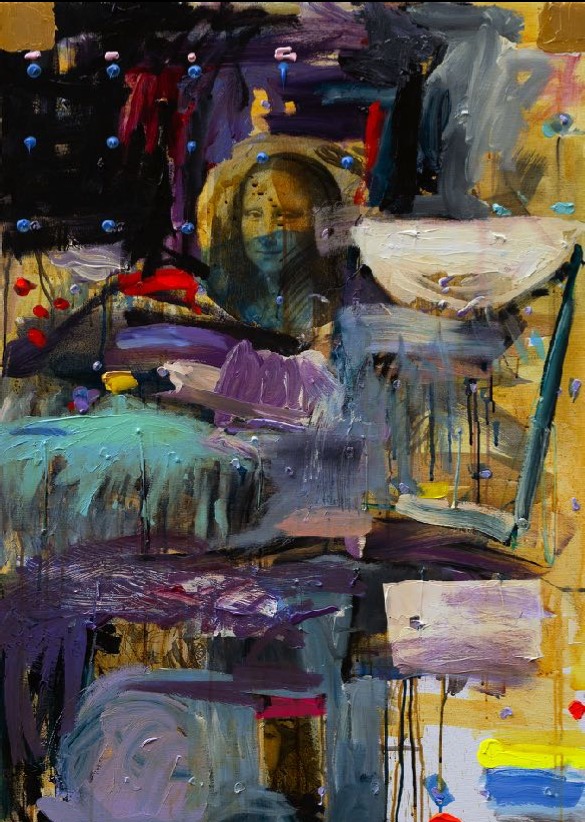
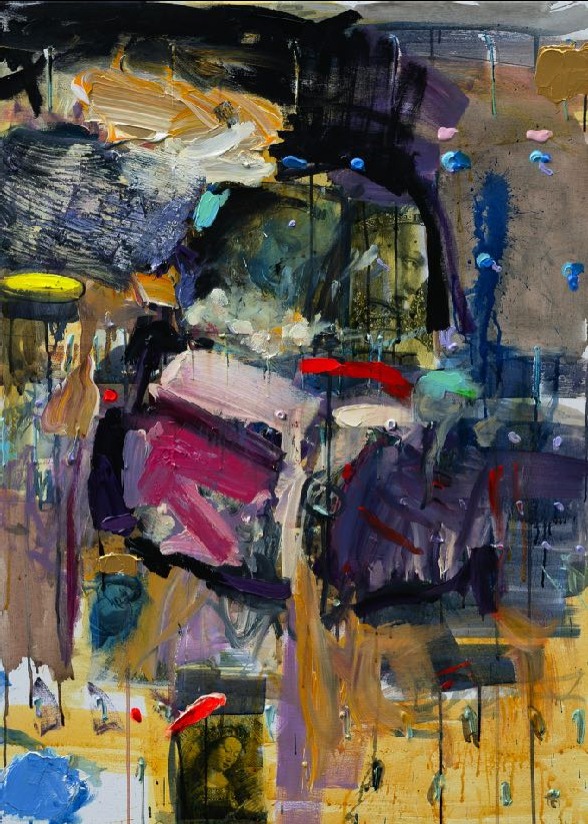
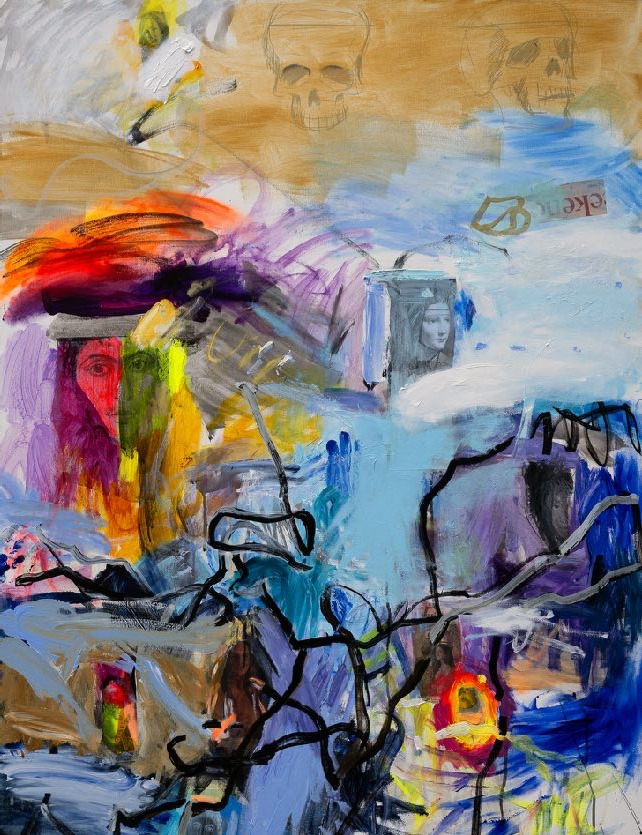
In an analysis published in 2011, R. Venckus highlighted the significance of chromatic contrast, expressive brushwork, and collage in Plungė’s work. The interplay of these methods creates a singular pictorial space where multiple temporalities, cultural ciphers, and memory fragments intersect. Collage functions here not merely as a technical image-making method, but as a vehicle for deconstructing and transforming habitual perception.

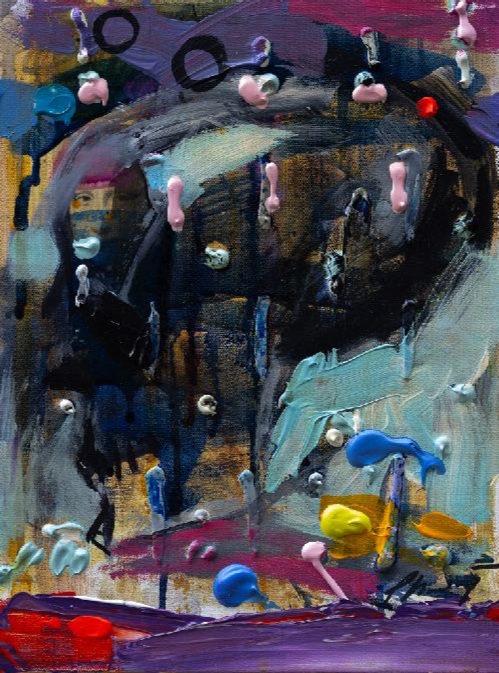
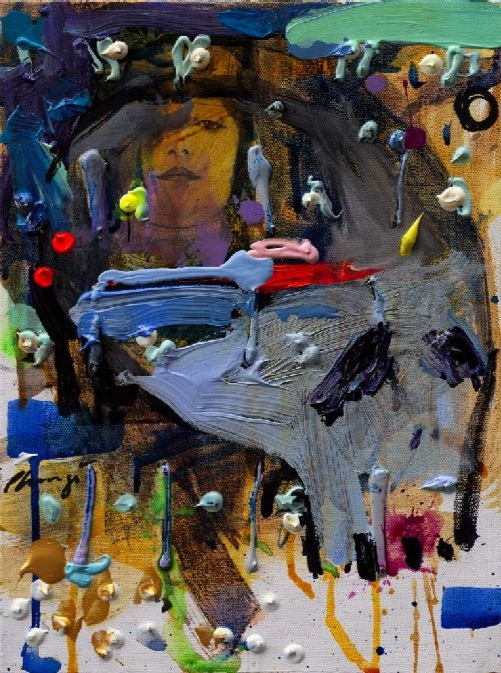
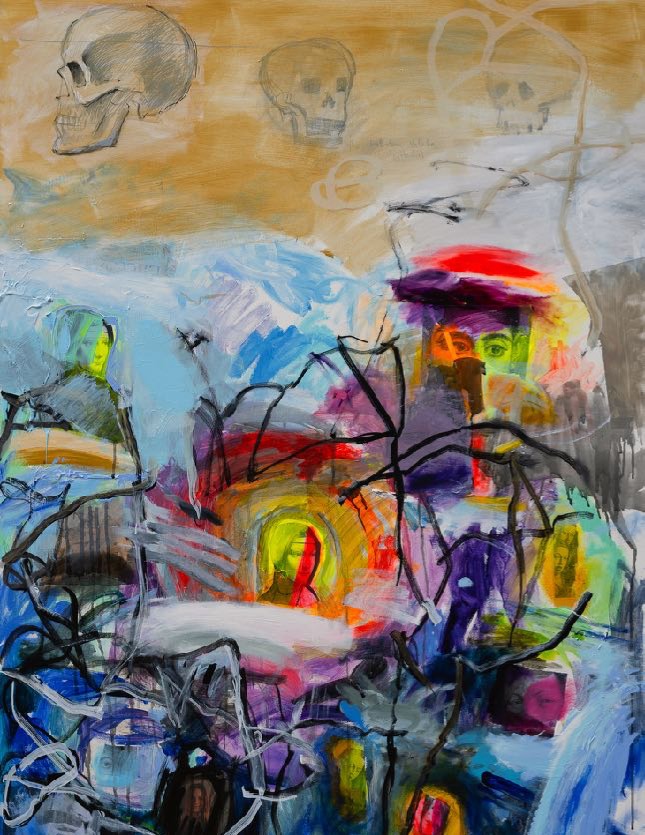
This creative logic extends into Plungė’s recent paintings. In works created in 2024 and exhibited in 2025 exhibitions, expressive palettes, layered surfaces, impulsive gestures, graphic fragments, and collage interventions come to the fore. The pieces are characterized by tension between spontaneous gesture and consciously formed compositional structure.

The solo exhibition “Immersion”, staged in 2025 at the Šiauliai Art Gallery, further articulated this creative trajectory. R. Venckus’s critical reflection emphasized that colour and texture in Plungė's painting operate as vehicles of intense sensation, affective memory, and intimate experiential engagement.

Although visually resonant with the abstract art tradition, Plungė resists defining his practice solely through the term abstraction. Beneath colours, lines, and textures always lie lived encounters, individual imagery, and the maker’s relationship with reality. Rather than illustrating a specific subject or storyline, the painting creates conditions to re-examine it anew.

Consequently, what matters in Plungė’s painting is not merely the final compositional result. The painting process itself becomes vital — a perpetual motion between structure and freedom, control and impulse, deliberate decision and serendipitous discovery. In this practice, painting itself functions as a profound form of reflection, concentration, and self-examination.

(04 / 07)

Photography: Transformations of Time, Memory, and Reality

Rimantas Plungė's experimental photography is inextricably linked to his painting and collage practice. In photographic imagery, he seeks not only to capture the world, but to reconstruct its visual anatomy, assembling disparate image fragments, temporal layers, and cultural emblems.

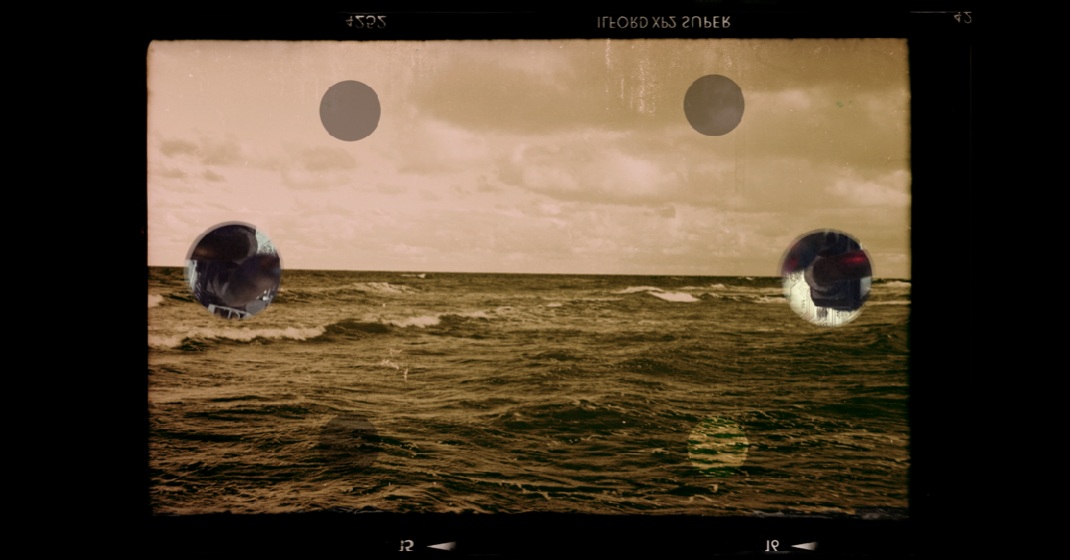
This creative direction is exemplified by the photographic cycle “Silences”, presented in 2018 at the Lithuanian National Commission for UNESCO Gallery in Vilnius. In an essay by R. Venckus, these photographs are examined as outcomes of conceptual artistic research addressing questions of temporality, memory, cultural identity, and visual representation.

In photography, Plungė juxtaposes seemingly incompatible imagery and fragments from divergent historical and cultural contexts. Motifs from the Hill of Crosses encounter modernist architectural geometries, traces of individual and collective memory, and contrasting modes of perceiving reality.

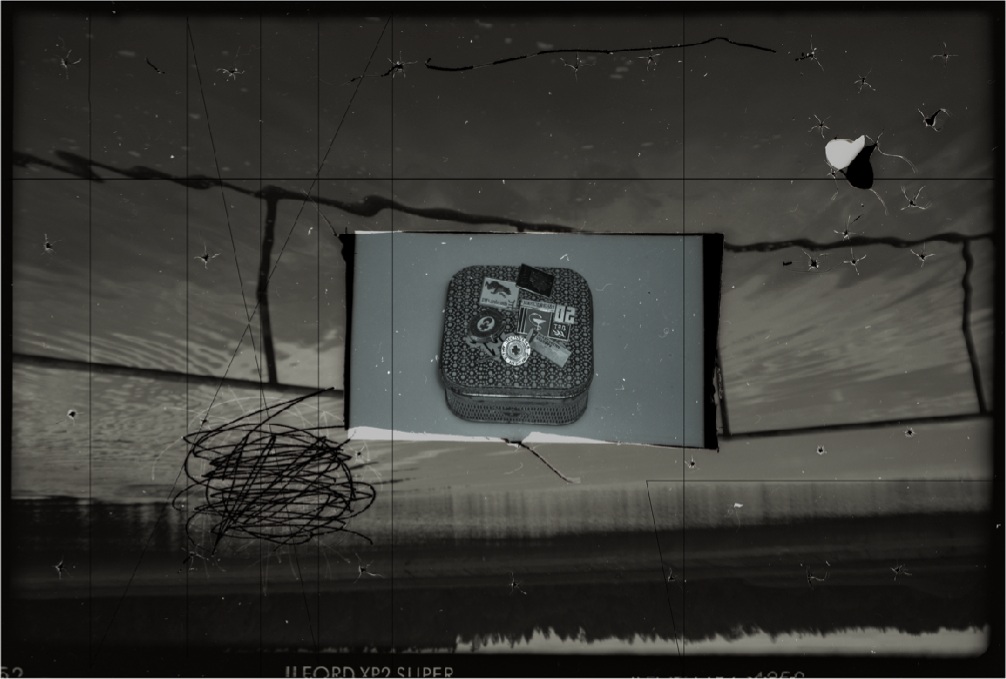
The physical photographic making process is equally crucial. Plungė experiments with analog and digital technologies, physically intervening on photographic film, cutting, tearing, splicing disparate negative fragments, and later digitizing them. Photography thus transcends purely documentary recording to become an autonomous mode of visual thought.

In a 2018 dialogue with the artist conducted by R. Venckus, this process emerges as continuous visual transformation. Analog and digital images transmute one another, while iterated technical gestures allow new visual relationships to unfold.

Cycles such as “Silences”, “Emptiness”, and “Games with Badges” reveal diverse facets of this practice: from interpreting personal and collective memory to the dynamic tension between photographic surface, documentary frame, and cultural iconography.

(05 / 07)

Video Art: The Image as an Experience of Time

Video art in Rimantas Plungė's oeuvre extends the ideas cultivated in painting and photography, while enriching them with the dimensions of motion and duration.

A prominent video project is the ongoing film series “Painting Lesson”. In this practice, painterly contemplation is translated into the moving image, transforming visual composition into an experience unfolding in time.

This approach prompts a reassessment of established medium boundaries: painting is recognized not merely as a static surface, photography not solely as a frozen instant, and video art not simply as a recording of empirical movement.

Across Plungė’s work, these media continually interact, exchange operational principles, and amplify one another. It is this intermedial resonance that reveals the singularity of his interdisciplinary practice.

(06 / 07)

Interdisciplinary Art as an Aesthetic Stance

Rimantas Plungė's creative and scholarly trajectory grounds a conception of interdisciplinary art that goes far beyond combining different technologies or media. Interdisciplinarity in his work manifests fundamentally as a distinct cognitive and perceptual strategy.

His practice poses inquiries into the relationship between art and science, rationality in creative process, the role of intuition, technological experimentation, and the primacy of personal experience. Different media become tools for resolving distinct aesthetic problems, yet they remain unified by a coherent authorial stance toward the world.

The viewer's position is equally essential. The artwork is not a closed execution of an author's preconceived scheme; it generates interpretive multiplicity and invites the audience into active co-creation of meaning.

(07 / 07)

Encounter “Interdisciplinary Art”

15 November 2026, 12:00

Hosted within the programme of the 1st International Contemporary Art Triennial “Dialogues”, the dialogue with Prof. Dr Rimantas Plungė will examine the concept of interdisciplinary art, its significance for contemporary creative practice, and the artist's relationship with multifaceted visual media.

The encounter will explore how painting, photography, video art, and digital technologies function as interrelated practices of artistic research. Discussion will focus on how ideas determine the choice of medium, how technology transforms artistic form, and what roles intuition, chance, lived experience, and deliberate composition play in creative work.

Special emphasis will be placed on the dialogue between art and science, creativity as a mode of understanding reality, and the audience's interpretive autonomy.

The conversation will be moderated by Prof. Dr Remigijus Venckus, who has researched and presented Plungė’s practice in critical writings for many years, alongside participating in collaborative exhibitions and curatorial projects.

The encounter invites audiences to experience interdisciplinary art as a sphere of creative liberty, intimate exploration of the world, and continuous visual reinvention.

(Video Art & Documentation · Moving Image)

Video Art and Lectures

(02 video records)
Video Artwork 2021

Painting lesson (decisive moments)

Exhibition: “Borderless: Digital Practices in Changing Times”
Institution: The Noyes Museum of Art of Stockton University (USA)

A piece from Rimantas Plungė’s ongoing video series “Painting Lesson”. Here, painterly cognition, chromatic gesture, and rhythmic materiality are translated into the moving image, disclosing the creative process as a temporality unfolding in time.

Author: Prof. Dr Rimantas Plungė
Format: Experimental Video Art · HD
Public Lecture 2026

“Art About Life and Life as Art”

Venue: Antazavė Manor (Zarasai district, Lithuania)
Organizers: Antazavė Manor, Dusetos Culture Foundation

Public lecture by VMU Faculty of Arts professor, PhD in educology, and interdisciplinary artist Rimantas Plungė. The presentation addresses the essence of creation, the dialogue between lived experience and the artistic sign, everyday existential transformations, and the communicative field established between author and audience.

Lecturer: Prof. Dr Rimantas Plungė
Documentation: Gintautas Kažemėkas
(Radio and Conversations · Audio Recording)

Audio Recording

(01 recording)
LRT radioteka Click to listen
LRT Radioteka · “35 milimetrai”

“Asmenukės fenomenas: fotografuojamės dėl savęs ar kitų?” (The Selfie Phenomenon: Do We Photograph Ourselves for Ourselves or Others?)

Platform: LRT radioteka (Lithuanian National Radio & Television)
Programme: “35 milimetrai”

An audio broadcast of the LRT Radio programme “35 milimetrai” examining selfie culture and the evolution of self-portraiture—from early self-portraits in photographic history to contemporary social media everyday life. The guests discuss how self-photography reshapes the boundaries between private and public spheres as well as the contemporary relationship with the image.

Guests: Prof. Dr Rimantas Plungė, Prof. Dr Remigijus Venckus
Host: Donatas Šukelis
Broadcast date: 13 June 2023
Format: Radio programme · audio recording (in Lithuanian)
(Sources & Criticism · APA Style)

Essays and Media Archive

Full register →