← Back to programme · (04 / 04)

Prof. Dr Remigijus Venckus

(Lecture Date) 7 February 2027 · 12:00
(Lecture Topic) Abstract Art
(Media) Painting · Photography · Video Art · Art Criticism
(Venue) J. Monkutė-Marks Museum-Gallery, Kėdainiai
(04 · Media Artist and Art Critic)

Prof. Dr Remigijus Venckus

Prof. Dr Remigijus Venckus
(Closing Lecture)

7 Feb 2027 public lecture “Abstract Art”, concluding the four-encounter “2K” series.

(01 / 08)

About the Artist

Prof. Dr Remigijus Venckus is a Lithuanian media artist, art historian, art critic, exhibition curator, and Professor of Arts at the Department of Graphical Systems, Faculty of Fundamental Sciences, Vilnius Gediminas Technical University (VILNIUS TECH). His creative and academic practice brings together experimental photography, video art, computer graphics, abstract painting, contemporary art criticism, and visual culture research.

Born in 1981, he received his higher education at Šiauliai University, graduating with honours with a bachelor's degree in fine arts and printmaking in 2004, and earning a master's degree in art history in 2006. In 2014, at Vilnius Academy of Arts in collaboration with the Lithuanian Culture Research Institute, he defended his doctoral dissertation in the humanities (art theory and history) titled “The Application of Jacques Derrida's Deconstruction to the Study of Video Art”. In his dissertation, he examined problems of expression, representation, and visual storytelling in video art through philosophical approaches of deconstruction.

He has been engaged in academic work since 2004. Over more than two decades, he has taught at various Lithuanian higher education institutions, including Šiauliai University, Vytautas Magnus University, and Vilnius University. He has also worked at Kazimieras Simonavičius University, where he carried out academic and administrative duties. He currently teaches courses related to visual communication, media design, photography, composition, color theory, contemporary technologies, and creative processes at VILNIUS TECH.

He participates in academic visits, collaborates with foreign scientific and art institutions, and conducts public lectures, seminars, and creative workshops. His professional activity is grounded in a consistent endeavor to combine artistic practice, theoretical research, and education.

Venckus's work is presented in Lithuanian and international museums, galleries, art centers, and cross-border projects. His oeuvre consistently returns to questions of memory, time, space, individual experience, human identity, bodily representation, and perceptions of reality. Different artistic media become not only tools of expression, but unique ways of knowing and interpreting the world.
(02 / 08)

Creative Practice: Between Visible Reality and Individual Experience

Remigijus Venckus's creative practice rests on the premise that an artwork is not merely a depiction of visible reality or an illustration of an author's concept. Making art is understood as a continuous process of rethinking reality, shaping visual language, and investigating individual experience.

The creator's focus turns not only toward what can be seen directly, but toward what lies behind the visible image: memories, emotional states, cultural signs, fragments of human identity, and traces left by time. These themes form a common foundation for photographs of different periods, video artworks, digital graphics, and painting.

The relationship between the initial concept and the contingency that emerges during the creative process is essential to the artist. The chosen material, technology, or artistic technique does not always yield to a predetermined idea. Frequently, it is precisely experiment, accidental distortion, an unplanned color relationship, or even a technical error that sparks a new creative breakthrough.

In this way, artistic creation becomes a dialogue between conscious intent and what emerges within the creative process itself. The artwork acquires autonomy, and its meaning unfolds not only through the interpretation offered by the author, but through the viewer's ability to recognize, experience, and decipher visual signs in their own way.

(03 / 08)

Experimental Photography: Memory, Time and the Transformation of Reality

Experimental photography is one of the most prominent and longest-developed areas of Remigijus Venckus's oeuvre. Originating from an interest in documenting the visible world, it evolved over time into an autonomous practice of artistic inquiry, where documentary images are transformed into multilayered, associative, and often abstract visual realms.

The artist experiments with analogue and digital photographic technologies, exploring the structure of the photographic surface, image fragmentation, layering, distortion, and the merging of disparate images. In his photography, what matters is not only the recognizability of an object, but the materiality of photography itself and the technological conditions of its emergence.

The problematics of memory and time hold a special place. Photography is traditionally conceived as a means of preserving a fleeting moment from the past; in Venckus's work, however, this assumption becomes an object of critical reflection. A photographed image is never entirely identical to the reality that once was. It is selected, fragmented, transformed, and perpetually reinterpreted.

This creative stance is revealed in photographic cycles such as “Amnesia Tape”, “Amnesia Film”, “Nobody's Gaze”, “Intersecting Lines. Berlin”, “Empty Screens”, and other experimental photography projects.

In “Amnesia Tape”, the deformation of the photographic image becomes a meaningful way to articulate the transience of memory. Analogue photographic film is physically altered; damages, accidental traces, and the decay of material generate new visual structures. Photography here does not so much preserve a pristine historical document as expose the fragility of recollection and its inevitable transformation.

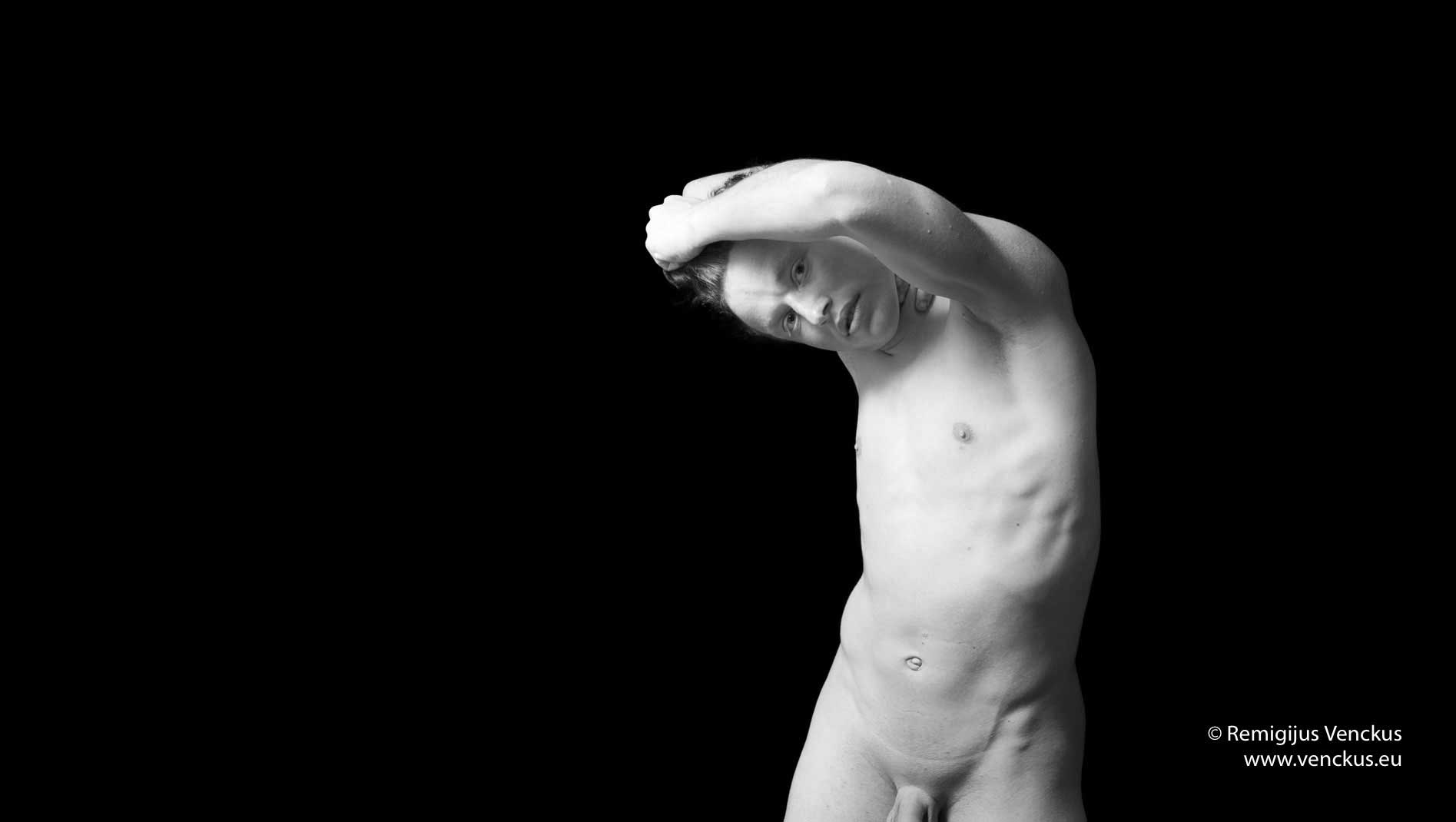
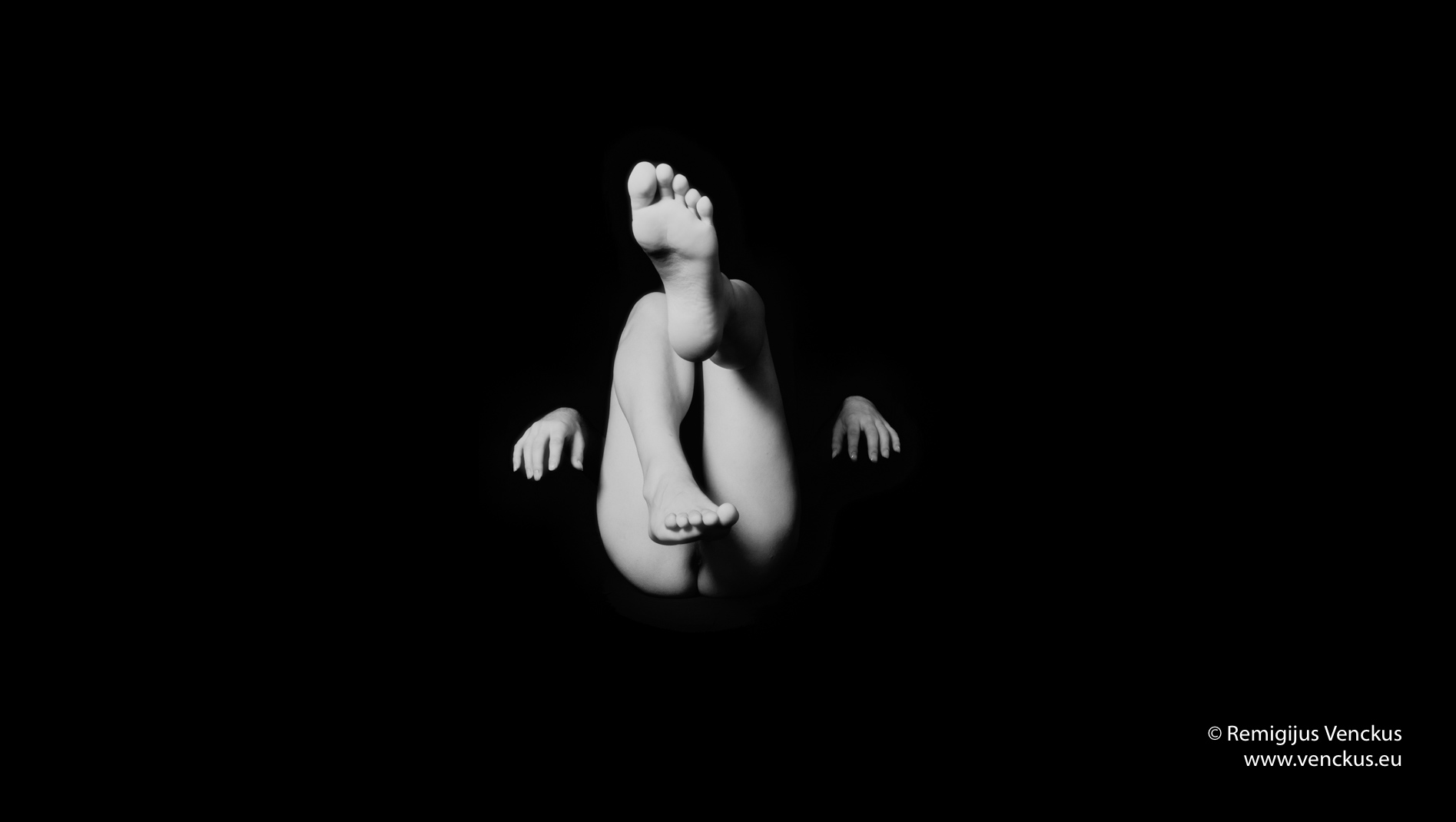
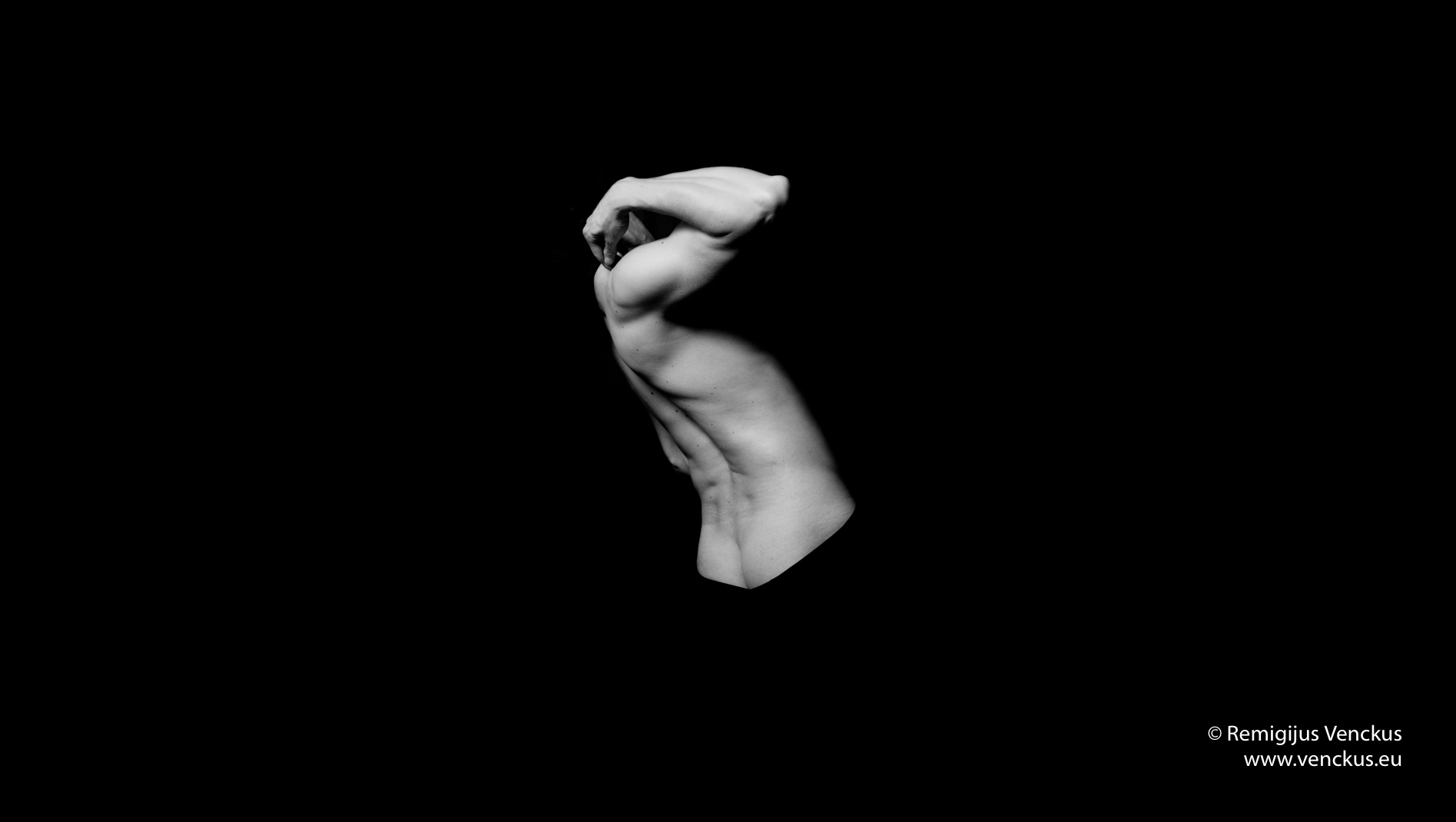
In other photographic cycles, questions of the human body, identity, intimacy, and the social gaze come to the fore. The artist utilizes photography as an instrument to examine how an individual is seen, how one perceives oneself, and how one's image becomes the subject of cultural and social interpretations.

Thus, photography in Venckus's practice is not merely a recording technology. It becomes a visual language that allows us to rethink the relationship between what actually existed, what was captured, and what subsequently awakens in the consciousness of the viewer.

(04 / 08)

Video Art: The Moving Image and Principles of Deconstruction

A substantial portion of Remigijus Venckus's early career consists of experimental video art. Between 2002 and 2013, he actively produced video films, exploring the structure of the moving image, editing possibilities, the experience of time, and relationships between distinct audiovisual components.

Video art served as a realm in which the artist could abandon the narrative continuity of conventional cinema, causal story arcs, and customary rules of representing reality. By experimenting with image duration, repetition, fragmentation, and montage, the author sought to reveal alternative modes of visual perception.

These artistic investigations are intimately tied to his scholarly research in art theory. Video art became not only a field of individual expression, but also an object of theoretical inquiry. In his 2014 doctoral dissertation, questions of visual representation were examined through the deconstructive philosophy of Jacques Derrida.

This approach enables critical deliberation on how conventional visual meanings are constructed and sustained, what representational conventions govern viewer experience, and how artistic experiment can disrupt these conventions.

The artist's video art has been presented in Lithuania and abroad. In 2018, at the two-person exhibition “Baltic Appearances – Baltische Erscheinung” at the “World in a Room” gallery in Berlin, video artworks by Venckus from the 2004–2018 period were showcased.

Although his subsequent practice placed greater emphasis on photography and, from 2023 onward, on painting, his background in video art remains foundational to his creative sensibility. It manifests in an inclination toward layering images, transforming visual syntax, and discovering unexpected interplays across media.

(05 / 08)

Abstract Painting: Freedom, Contingency and Creative Experiment

Since 2023, Remigijus Venckus has been intensively developing his abstract painting practice, in which earlier experiences in media art, principles of graphics, an intuitive relationship with color, and personal interpretations of reality converge.

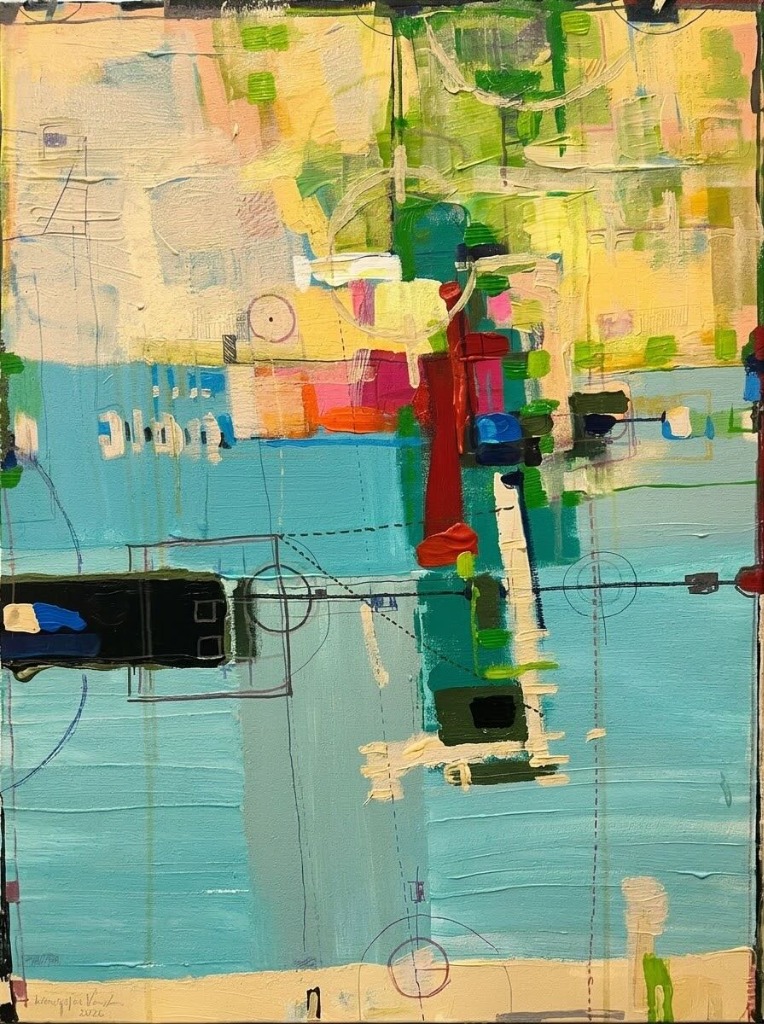
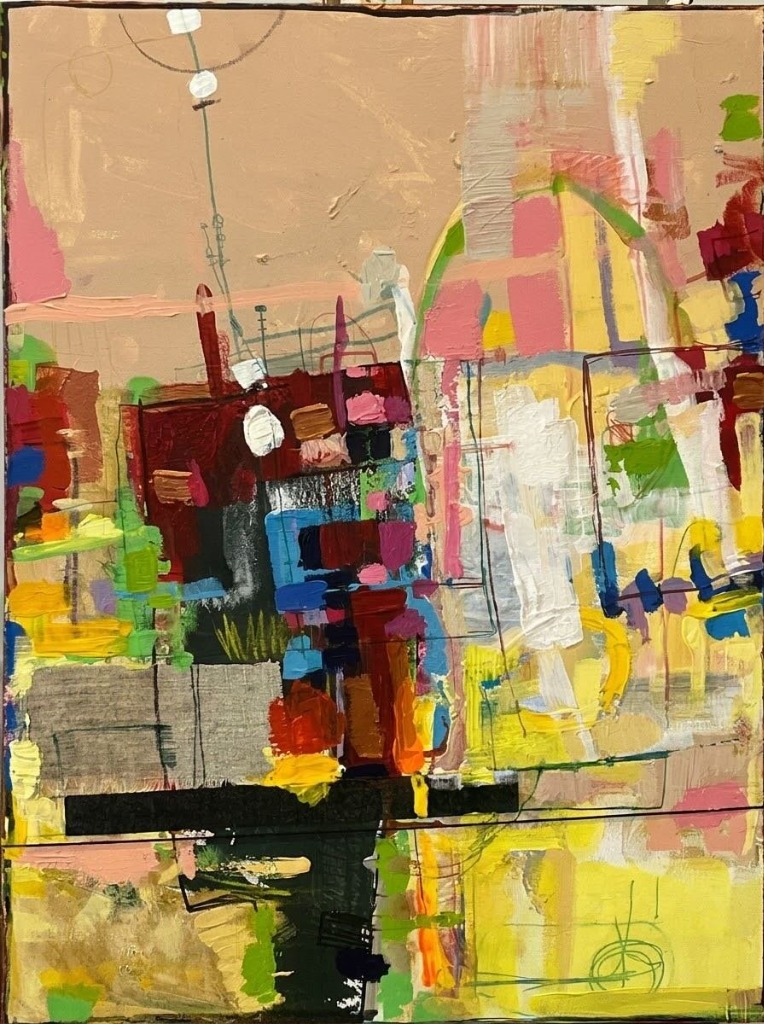
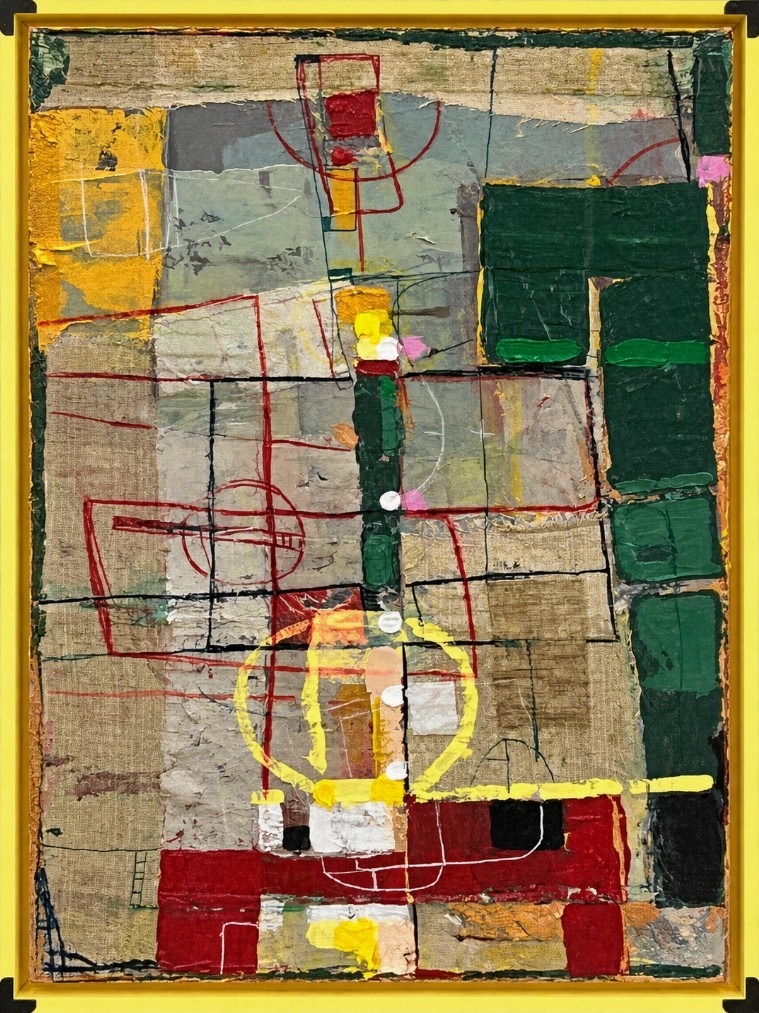
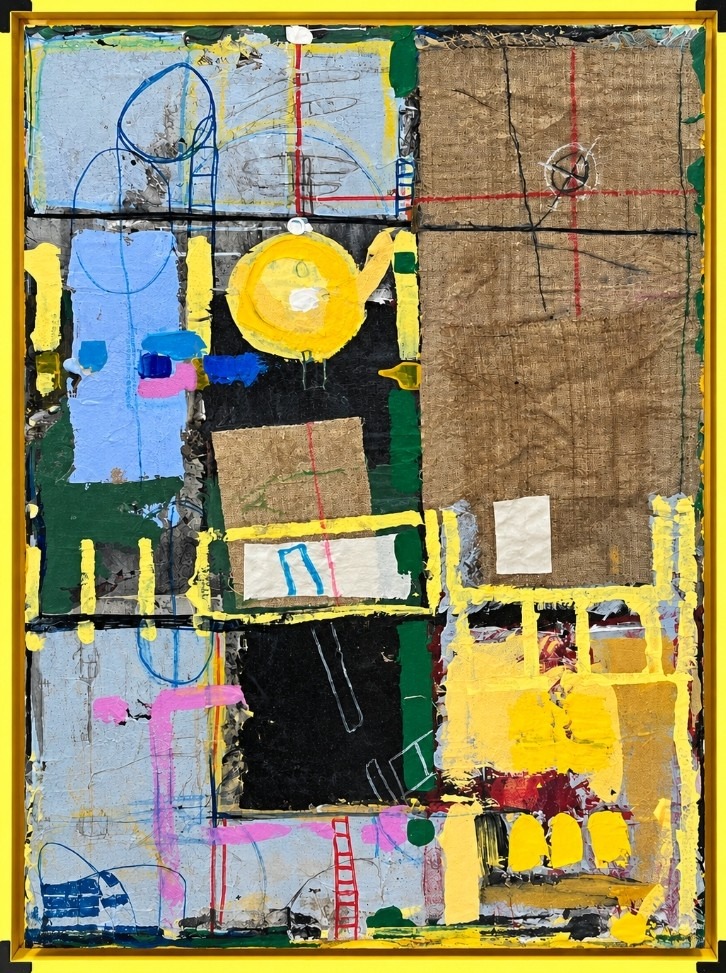
Although painting is a traditional discipline of visual art, the artist approaches it through the lens of interdisciplinary practice. The canvas surface becomes a unique experimental space where color, brushstroke, texture, line, and composition act as autonomous elements of artistic thought.

Begun in 2024, the exhibition series “Freedom and Contingency” marks a significant milestone in the artist's path. In this cycle, abstraction is conceived not as a simple rejection of visible reality, but as an opportunity to interpret it through intuition, emotional experience, and an autonomous system of visual signs.

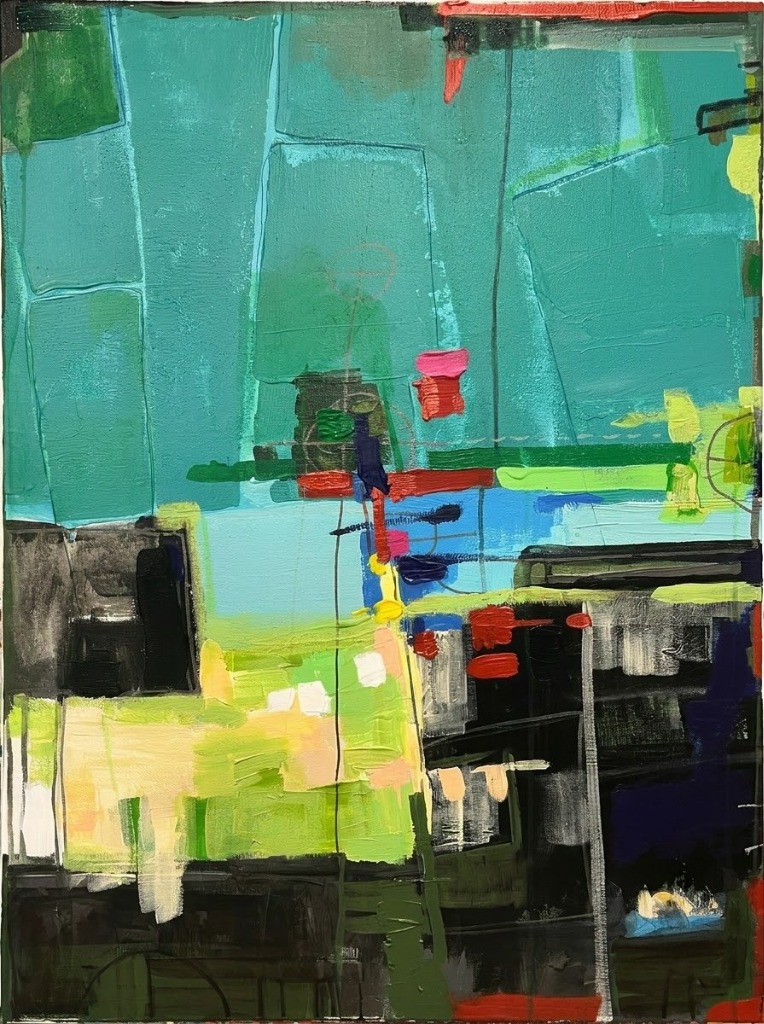
In the artist's canvases, vast, relatively flat color fields often collide with intricate, contrasting graphic elements. Such compositional structure creates dynamic tension between apparent stillness and inner movement. A closer look reveals multiple painterly layers, chromatic relationships, and surface rhythms.

These creative principles have been analysed in scholarly texts by Prof. Dr Rimantas Plungė. In his interpretations, Venckus's painting is described as a multilayered visual field where color planes and graphic details interact, inviting the viewer's gaze to shift continuously between cohesive composition and isolated components.

Contingency is likewise vital to the artist's method. The painting process does not necessarily begin with a specific subject or a meticulous preliminary sketch. A work's composition can evolve during painting, responding to emerging color balances, the motion of the brush, or unexpected behavior of the medium.

In the 2025 exhibition “Giraffe Browsing Leaves” at the “Laiptai Gallery” in Šiauliai, the author's interest in the autonomy of color, compositional play, and creative freedom was brought into sharp relief. This trajectory was subsequently continued in exhibitions such as “Color and Light”, “Freedom and Contingency: Without Prior Trajectory…”, “The Layer of Painting”, and “Beyond Painting: Freedom and Contingency”.

Within the context of these exhibitions, painting becomes not merely an aesthetic outcome, but a methodical process of self-knowledge. Intuition, unpredictability, and creative experimentation enable the formation of an artistic language in which the interpretation of the visible world is unconstrained by predefined meanings.

(06 / 08)

“Anatomy of Color”: Color as an Object of Artistic Inquiry

In 2026, Remigijus Venckus began developing a new conceptual direction in his painting – “Anatomy of Color”. Emerging from prior explorations of color, composition, and abstraction, it gradually took on the character of an autonomous artistic project.

Crucial to the emergence of this direction was the painting cycle “Green Thoughts”, in which the artist experimented with relationships among green hues, monochromatic expression, and intuitive form-building. Here, green can be perceived not only as a reference to nature, but as an articulation of personal states, thoughts, sensations, and emotional depth.

In “Anatomy of Color”, color is no longer merely a visible quality on the canvas surface, but the primary subject of artistic research. The artist investigates how color affects human perception, what emotional and associative connections it constructs, how it shifts across varied compositional balances, and what significance it acquires through dialogue with texture, graphic drawing, and material surface.

Crucially, creative practice in this project is closely interwoven with theoretical reflection. In 2026, the author formulated an extensive art-historical text, “Anatomy of Color”, examining the problematics of color through the lenses of art history, philosophy, and aesthetics.

Thus, “Anatomy of Color” demonstrates a distinctive synthesis between artistic practice and theoretical inquiry. Painting is not merely an illustration of pre-formulated theoretical claims; conversely, discoveries made on the canvas provoke fresh theoretical questions, while theoretical reflection allows the emerging image to be perceived anew.

This direction signifies an important developmental phase in the artist's journey, where extensive experience in media art, photography, and art criticism merges with new experiments in abstract painting.

(07 / 08)

Art History and Criticism: From Artist's Intent to Viewer's Interpretation

Remigijus Venckus is not only an active artist, but also a dedicated researcher of contemporary visual culture and an art critic. His scholarly practice encompasses the analysis of photography, video art, painting, printmaking, interdisciplinary art, and technology-driven creative processes.

In his critical writing, the interplay among form, content, technology, and interpretation is paramount. An artwork is not viewed as a closed system of meanings whose ultimate explanation rests solely with its author. On the contrary, artistic meaning emerges at the intersection of diverse cultural backgrounds, historical references, the artist's intent, and the viewer's interpretation.

This critical outlook is profoundly influenced by the philosophy of deconstruction, which encourages questioning established conventions of visual perception, traditions of representation, and the settled meanings of cultural signs.

Venckus regularly writes on Lithuanian contemporary art, publishing reviews, interviews, exhibition annotations, and critical essays. His texts appear in cultural periodicals and online platforms, with a significant corpus assembled in his personal cultural criticism archive, “Kultūros kirtis” (Culture Clash).

These writings blend rigorous academic argumentation with an individual, reflective critical voice. While analytical readings are grounded in art history, aesthetics, philosophy, and media theory, they acknowledge that aesthetic appreciation cannot be entirely divorced from personal experience.

A consistent dialogue with living creators occupies a central role in his work. Through interviews and close readings, artists' biographies, daily experiences, and creative decisions become springboards for broader discussions on the nature of art, authorship, and transformations in contemporary culture.

Prime examples of this approach are Venckus's essays and interviews with Prof. Dr Rimantas Plungė and photographer Marija Šileikaitė-Čičirkienė. Published across different periods, these texts trace not only interpretations of particular works, but also the evolving artistic philosophies of the creators.

Art criticism in Venckus's practice functions as an ongoing intellectual conversation, wherein analyzing an artwork enhances understanding of its creation, cultural context, and human engagement with art.

(08 / 08)

Curating, Exhibitions and Cultural Education

Remigijus Venckus's professional practice encompasses organizing and curating a wide spectrum of cultural initiatives. He has curated solo and group exhibitions, international art projects, festivals, panel discussions, and educational events.

In his curatorial practice, attention is directed not merely to selecting and installing artworks, but to their reciprocal relationships, the dramaturgy of the exhibition, spatial context, and shaping the audience's encounter.

For the artist, an exhibition can be understood as a distinctive visual narrative where individual artworks do not function in isolation, but as elements of an expansive artistic whole. This perspective establishes curating as a creative and intellectual practice bridging the artwork, space, and society.

According to 2026 career records provided by the author, Venckus has held 104 solo exhibitions and events (93 in Lithuania and 11 abroad). He has participated in 52 international and 41 national and regional group exhibitions and art events. Additionally, he has served as curator for 27 international and 13 national art events, festivals, and exhibitions.

His artworks are held in public and institutional museum collections, archives, and private collections across Lithuania, Latvia, Poland, and Germany.

In his academic and educational work, Venckus seeks to unite theoretical knowledge of artistic phenomena with hands-on creative experimentation. To students and lecture audiences, he introduces not only art history, visual culture, and technological evolution, but the sheer complexity of the creative process itself.

This pedagogical commitment rests on the conviction that artistic education must foster independent thinking, experimentation, critical literacy regarding images, and the ability to articulate personal creative choices.

(Experimental Video Art · Moving Image)

Video Art Works

(02 works)
Video Art · 2009

“COW POESY”

An experimental video art and audiovisual piece created collaboratively with members of the artistic movement “Sintezija”. The work re-examines the rhythm of moving image and audio, fragmentation, and ironic poetic narrative.

Authors: Remigijus Venckus & SINTEZIA group
Year: 2009
Genre: Experimental video art · audiovisual poetics
Video Film · 2005

“THE STRANGE MOTIVE OF ROAD”

An early authorial video film by Remigijus Venckus demonstrating the application of deconstructive philosophy to the moving image, shifting perceptions of duration, speed, and the open road (screened at NEXT festival, Vilnius).

Author: Prof. Dr Remigijus Venckus
Year: 2005
Genre: Experimental video art · deconstruction
(Exhibition Documentation · Painting Manifesto)

Exhibition Documentation & Essay

(02 video records)
Exhibition Documentation

“COLOUR AND LIGHT” – Solo Painting Exhibition

In-depth video documentation of Prof. Dr Remigijus Venckus’s solo painting exhibition “Colour and Light” (from the cycle “Freedom and Contingency”) hosted at the Trakai History Museum Art, Culture and Leisure Tower (Trakų Vokė Manor Estate / Trakai). Vivid colour contrasts, gestural brushstrokes, and spatial lighting.

Artist: Prof. Dr Remigijus Venckus
Cycle: “Freedom and Contingency”
Venue: Trakai History Museum Tower / Trakai
Painting Manifesto / Essay

“ON PAINTING / APIE TAPYBĄ”

Prof. Dr Remigijus Venckus’s painting manifesto and authorial video essay “Freedom and Coincidence”. The author reflects upon the essence of abstraction: art emerges from creative tension and relationship with material, operating as an open system inviting the viewer to explore through rhythm, composition, and chromatic intensity.

Author: Prof. Dr Remigijus Venckus
Subject: Painting manifesto · philosophy of abstraction
(Radio · Television · Media Interviews)

Broadcasts & Media Interviews

(03 sources)
LRT mediateka Watch on LRT mediateka
LRT Mediateka · “Be kaukių”

“Media Artist Remigijus Venckus: Let’s Not Forget that Lithuania Is Not Just Vilnius”

LRT Mediateka broadcast from the series “Be kaukių”. An extensive interview exploring media art, the societal purpose of contemporary art, cultural vitality outside the capital, and personal creative trajectory.

Platform: LRT mediateka (Lithuanian National Radio & Television)
Programme: “Be kaukių”
Guest: Prof. Dr Remigijus Venckus
LRT radioteka Click to listen
LRT Radioteka · Talk

“Remigijus Venckus: There Is That Banality of Everyday Life Which Can Be Beautiful”

LRT radioteka cultural audio broadcast discussing how everyday ordinary moments are transformed into meaningful aesthetic encounters through an artistic lens, touching upon photography, memory, and visual presence.

Platform: LRT radioteka (Lithuanian National Radio & Television)
Guest: Prof. Dr Remigijus Venckus
Kultūros kirtis Read interviews archive
Kultūros kirtis · Media Interviews

Archive of R. Venckus’s Media Interviews

A specialized repository on “Kultūros kirtis” archiving interviews and commentary given by Prof. Dr Remigijus Venckus to Lithuanian cultural press, newspapers, portals, and media broadcasts regarding his solo painting and photography exhibitions, artistic philosophy, and academic research.

Platform: culture.venckus.eu / Interviews
Interviewee: Prof. Dr Remigijus Venckus
Content: R. Venckus’s interviews in cultural journalism and media
(Author Platforms & Portfolios)

Essays and Media Archive

(09 digital platforms & publications)
Main Website

venckus.eu – official personal website of Prof. Dr Remigijus Venckus: academic biography, artistic oeuvre, exhibitions, publications, and contacts.

Solo Exhibition

solo.venckus.eu – author portfolio, exhibition platform, and continuous artistic research “Anatomy of Color” (2026–2030).

Cultural Criticism

culture.venckus.eu – critical reviews, scholarly essays, exhibition surveys, and cultural analysis (“Kultūros kirtis”).

Behance Profile

behance.net/venckus – graphic design, book design, typography, and visual communication portfolio.

PDF Publication · Painting

R. Venckus – Painting Book 2023–2024 – comprehensive painting catalogue featuring scholarly annotations and color reproductions.

PDF Presentation

R. Venckus – Painting Presentation 2023–2024 – conceptual presentation and critical analysis of the “Freedom and Contingency” exhibition cycle.

PDF Portfolio · Design

R. Venckus – Book Design Portfolio – selection of editorial design, book layouts, monograph covers, and exhibition catalogues.

PDF Portfolio · Photography

R. Venckus – Photography Portfolio 2002–2019 – retrospective of experimental, series-based, and conceptual photography.

VILNIUS TECH · Interview

R. Venckus: “When You Are Free, Beautiful, Sincere, and Inspiring Things Can Happen” – VILNIUS TECH feature and interview discussing the solo painting exhibition “Freedom and Contingency. Dedicated to Vilnius”, creative autonomy, and community mobilization.